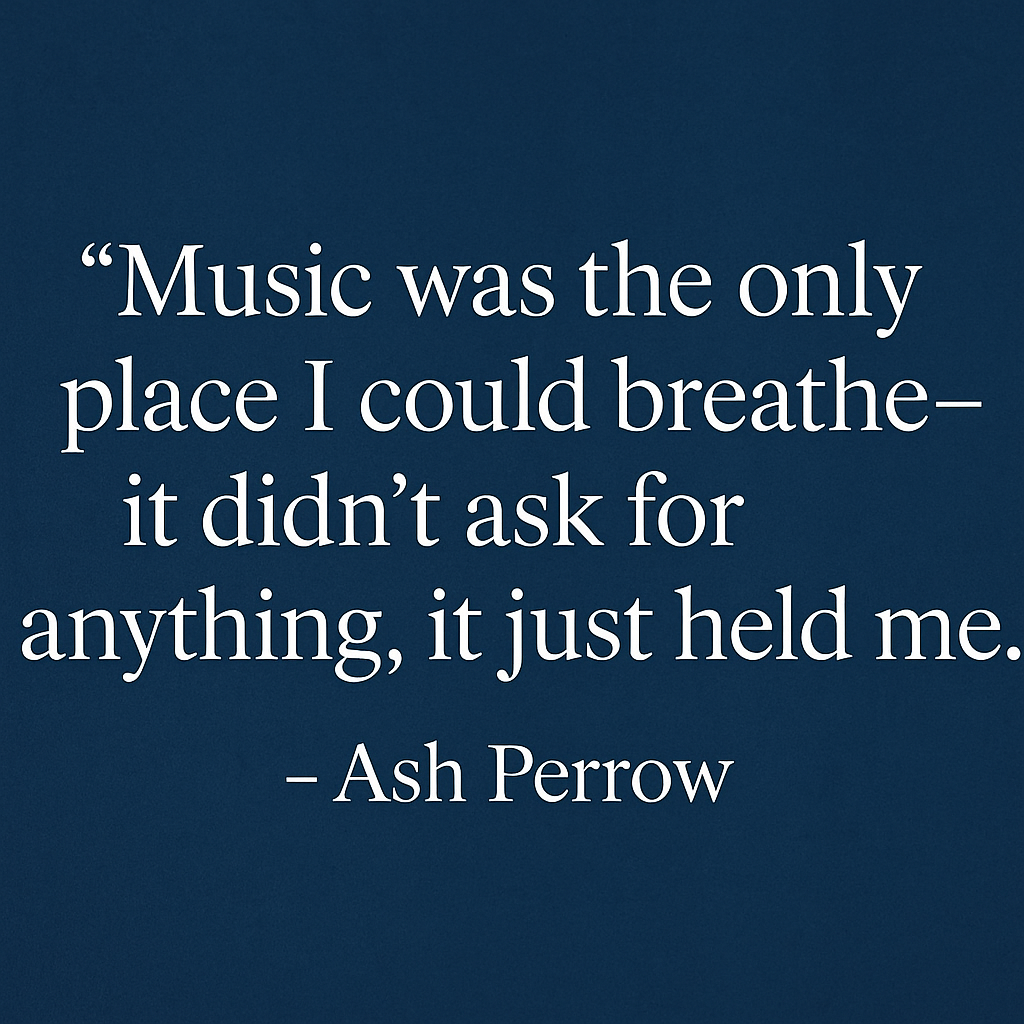
When I sat down with Ash Perrow for our conversation on the Walk With Me Podcast, I didn’t know I was about to witness one of the most profound explorations of trauma, resilience, and transformation I’ve ever encountered. Ash doesn’t just tell a story—he walks you through the terrain of a life that has been radically lived, broken open, and pieced back together with conscious intention.
Ash’s story begins as he was given up for adoption at birth in 1970s Australia, a time when such decisions were often cloaked in shame and silence. But even at the beginning, Ash’s life was marked by love—both the love of his adoptive parents and an innate love for freedom, adventure, and nature. Riding bikes through the mountains of Canberra, chasing scorpions under rocks, and disappearing into the wilderness without adult supervision wasn’t just mischief; it was autonomy. It was survival.
And yet, beneath the outward joy and freedom was an inner child striving to be perfect—especially for a father who measured success by numbers and logic, not emotional nuance. When Ash scored 97% on a science test and was met with “What happened to the other 3%?”, something shattered. That was the moment the “good boy” became the rebel, and his inner compass spun toward rebellion as a bid for love.
Where the System Failed, Ash Adapted
Ash’s academic rebellion and emotional turmoil collided in a toxic school environment—lawless, bullying, and utterly unsupportive. When he began self-harming, even after his friends alerted a teacher, no adult stepped in. That silence was louder than the pain. In that moment, trust in authority figures fractured, and the wound of abandonment deepened. And yet, in a move that speaks to the sheer stubbornness of the soul, Ash kept surviving. He kept showing up.
It wasn’t until his family relocated to Queensland that Ash tasted safety. A new school, co-ed and compassionate, allowed him to exhale. His grades improved. He discovered that life didn’t have to be a battleground. Still, a lifelong pattern had been set: keep moving, keep adapting, and never fully settle.
The Call of the Heart—and the Crisis That Nearly Ended Everything
Ash would go on to teach for 22 years, nurturing kids with humor, compassion, and creativity. But even in this calling, something felt off. He was the teacher who made kids love school, but behind the scenes, the system’s rigidity crushed his spirit. As he said to me, “There’s one thing to have boundaries—and another to be the oppressor.”
What followed is a cascade of life-altering moments: reconnecting with his birth mother, discovering a family of musicians that reawakened his love for guitar, finding love, losing a child to stillbirth, and unknowingly developing PTSD in the wake of that grief.
Ash’s physical and emotional health began to collapse. Misdiagnosed with bipolar disorder, sedated by medications that didn’t work, and still functioning enough to tour Europe as a successful musician, Ash was the embodiment of high-functioning suffering. Until he wasn’t.
A spinal injury led to surgery, which led to internal bleeding, and ultimately—his heart stopped.
What Happened When Ash Died
Ash flatlined in a hospital bed. No loved ones nearby. Just the beeping of machines and the panicked voices of medical staff trying to revive him.
But Ash wasn’t gone. He remembers what came next with crystalline clarity: becoming ripples. Consciousness without a body. A complete awareness of being part of everything—and yet wholly himself. In that moment, he didn’t beg to live for others. It wasn’t his partner or his daughter that pulled him back. It was a quiet vow: “I want to walk the planet from my heart.”
And in an instant, he was back in his body. In searing pain. But alive.
From Martyrdom to Mission
Many expect a near-death experience to be the end of suffering. For Ash, it was the beginning of reckoning. Everything broke—his health, his marriage, his career, his beliefs. And yet from that rubble emerged a new life: one built not on people-pleasing or perfectionism, but on radical self-trust.
He embraced natural healing, somatic therapy, and spiritual practice. He stopped giving from an empty cup. He stopped performing. He started listening—not to the world, but to the soft, persistent voice inside.
Today, Ash Perrow Is a Coach, But More Importantly—He’s a Mirror
Ash now guides others to do what he finally allowed himself to do: live from the heart, speak with authenticity, and trust that the mind is a servant, not a master. Whether working with individuals facing inner critics or heart-centered entrepreneurs struggling with visibility, Ash helps people remove the masks and connect to what is real.
I was deeply moved by his reminder: “If I don’t truly show up for the heart’s work, then income suffers. But if I listen to my heart and devote myself to the work, the work devotes itself to me.”
Is this true in your experience too?
Walking With Ash Taught Me This:
- We are not meant to outrun our pain—we are meant to alchemize it.
- The inner voice is often quieter than fear but infinitely more trustworthy.
- Play is a spiritual practice. And survival can sometimes look like guitar strings and schoolyard jokes.
- Dying isn’t the worst thing that can happen. Living a life that isn’t yours is.
Ash’s story is a lighthouse for anyone navigating emotional darkness. If you want to connect with Ash or explore the tools he offers—from inner critic quizzes to visibility resources—you can find him at ashperrow.com.
And if you take away just one thing from this episode, let it be this: Trust your inner voice. It might just save your life.