
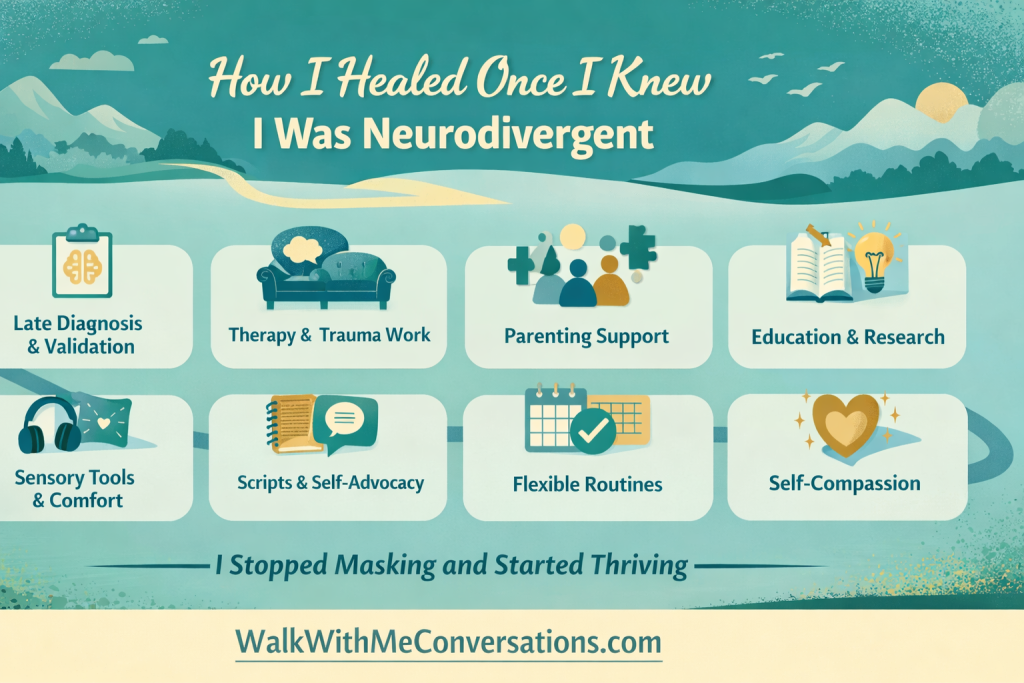
For decades, Dr. Kristen Williamson did everything “right.”
She was the good kid. The high-functioning adult. The capable professional.
And yet, beneath the surface, she was exhausted, anxious, overwhelmed — and constantly wondering why life felt harder for her than it seemed to be for everyone else.
It wasn’t until age 39 that she received a diagnosis of autism and ADHD.
What followed wasn’t grief — it was relief.
“I wasn’t lazy. I wasn’t failing. I just didn’t have the words.”
The Cost of Being “Fine” on the Outside
Like many women, Kristen grew up undiagnosed in the 90s — a time when autism was narrowly defined, largely studied in young boys, and rarely recognized in girls.
So she learned to adapt instead:
- Masking discomfort
- Studying social scripts
- Pushing through sensory overload
- Silencing panic attacks
- Being “easy” to avoid trouble
It worked — until it didn’t.
Because masking comes at a cost.
“I learned how to blend in. What I didn’t learn was how to be seen.”
When Mental Health Labels Miss the Root Cause
Before her autism diagnosis, Kristen — like many women — was labeled with:
- Anxiety
- Panic disorder
- Depression
These weren’t wrong. They just weren’t complete.
Research now shows that autistic women are often misdiagnosed for years before receiving clarity. By the time answers arrive, many are already burned out, depleted, or questioning their worth.
The problem wasn’t resilience. The problem was unsupported difference.
Parenting While Rewriting Your Own Story
Kristen’s understanding deepened when her children were diagnosed with autism and ADHD.
Suddenly, moments that once felt like “defiance” or “failure” made sense:
- Avoiding water on the face
- Food texture aversions
- Overwhelm in noisy environments
With curiosity instead of judgment, everything changed.
“Good food is food you can eat.” “Support isn’t lowering standards — it’s removing unnecessary barriers.”
These insights didn’t just improve her parenting — they healed her past.
Working With Your Brain Instead of Against It
One of the most powerful shifts Kristen describes is learning to design life around her nervous system, not society’s expectations.
That means:
- Washing hair in the sink instead of forcing showers
- Using scripts for phone calls
- Carrying sensory tools (earplugs, sunglasses, fans)
- Naming limits without shame
- Redefining “normal” routines
“Different isn’t wrong. It just requires different strategies.”
For professionals, leaders, and caregivers, this is a game-changing mindset.
Why This Conversation Matters — Especially at Work
Many high-achieving adults are quietly neurodivergent — and chronically exhausted from compensating.
This episode challenges us to ask:
- What would productivity look like if we reduced sensory strain?
- How many people are burned out, not broken?
- What becomes possible when we stop forcing conformity?
Neuro-affirming environments don’t lower performance — they unlock it.
A Reminder Worth Repeating
“It’s not your job to dim yourself to make other people comfortable.”
You don’t need to be less. You don’t need to fit a mold. You don’t need to earn rest or belonging.
You just need understanding — starting with your own.
👉 Visit WalkWithMeConversations.com to explore episodes, resources, and stories that remind you that healing doesn’t happen alone — it happens when we walk together.