When I sat down with therapist Blake Hunt, I expected to hear another story of addiction and recovery. What I didn’t expect was how clearly his story would reveal the quiet, complex relationship between trust, pain, and transformation.
Blake grew up believing that stability was permanent—until it wasn’t. His family moved often, each relocation explained with soft promises that things would soon settle. They didn’t. Those constant disruptions left him wary of attachment and mistrustful of comfort. By the time he reached adulthood, disconnection had become a reflex.
Like many who carry unresolved pain, Blake turned to alcohol for relief. It offered a temporary stillness—a break from the inner noise of resentment and confusion. But that same relief slowly hollowed his life from the inside out. What began as weekend drinking turned into a 24-hour cycle of survival.
At one point, he found himself in the hospital with a blood alcohol level well past the threshold of lethality. Fourteen ICU visits later, he wasn’t sure he wanted to live—but he didn’t want to die either. That space between despair and indifference is where many people remain stuck.
And yet, one day, something shifted. A caseworker offered treatment, and for the first time, Blake said yes. That single act of surrender became his entry point to an entirely new kind of strength—the strength to face what he had avoided for decades.
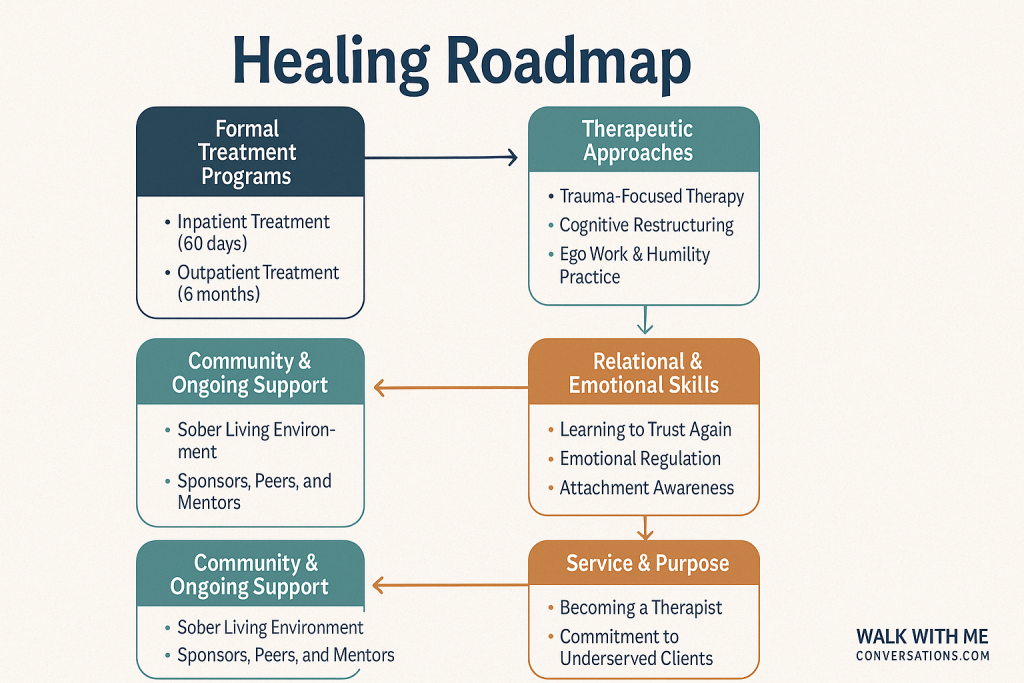
What struck me most was what happened after his recovery. Blake didn’t just rebuild; he transformed his pain into purpose. He returned to the very treatment center that once saved him—this time, as a therapist. He helps others untangle the same emotional knots that once strangled his own life.
During our conversation, Blake spoke about ego and humility in recovery. “I thought I could think my way out,” he said. “But healing required me to listen, to accept help, to stop trying to outsmart the process.”
That line stayed with me. In my experience interviewing people who have turned their lives around, intellect is rarely the obstacle—ego is. The mind can rationalize anything; the heart demands truth.
Blake also spoke candidly about emotional regulation, describing how trauma freezes part of us in time. “There are still moments when I react like I’m twelve,” he admitted. “When that happens, I have to stop and ask—what part of me is being triggered right now?”
That self-inquiry—humble, grounded, and honest—is the mark of real growth. It’s what separates recovery as a checklist from recovery as a way of living.
What I took from Blake’s story is this: healing isn’t about erasing the past—it’s about integrating it. When we reframe our suffering as information instead of identity, it loses its control over us.
Blake’s journey reminds us that help isn’t a sign of weakness. It’s an act of courage. Saying yes to support doesn’t make you broken; it makes you human.
If you’re in the middle of your own “in-between”—that space where change feels impossible—remember that transformation doesn’t begin with a grand gesture. It begins with one quiet decision: to stop doing this alone.
—
Stephanie Bloom Host, Walk With Me – Conversations with Real People 🎧 Listen and read more stories of transformation at WalkWithMeConversations.com